
SailPoint renewal season: what to ask before you sign another three years
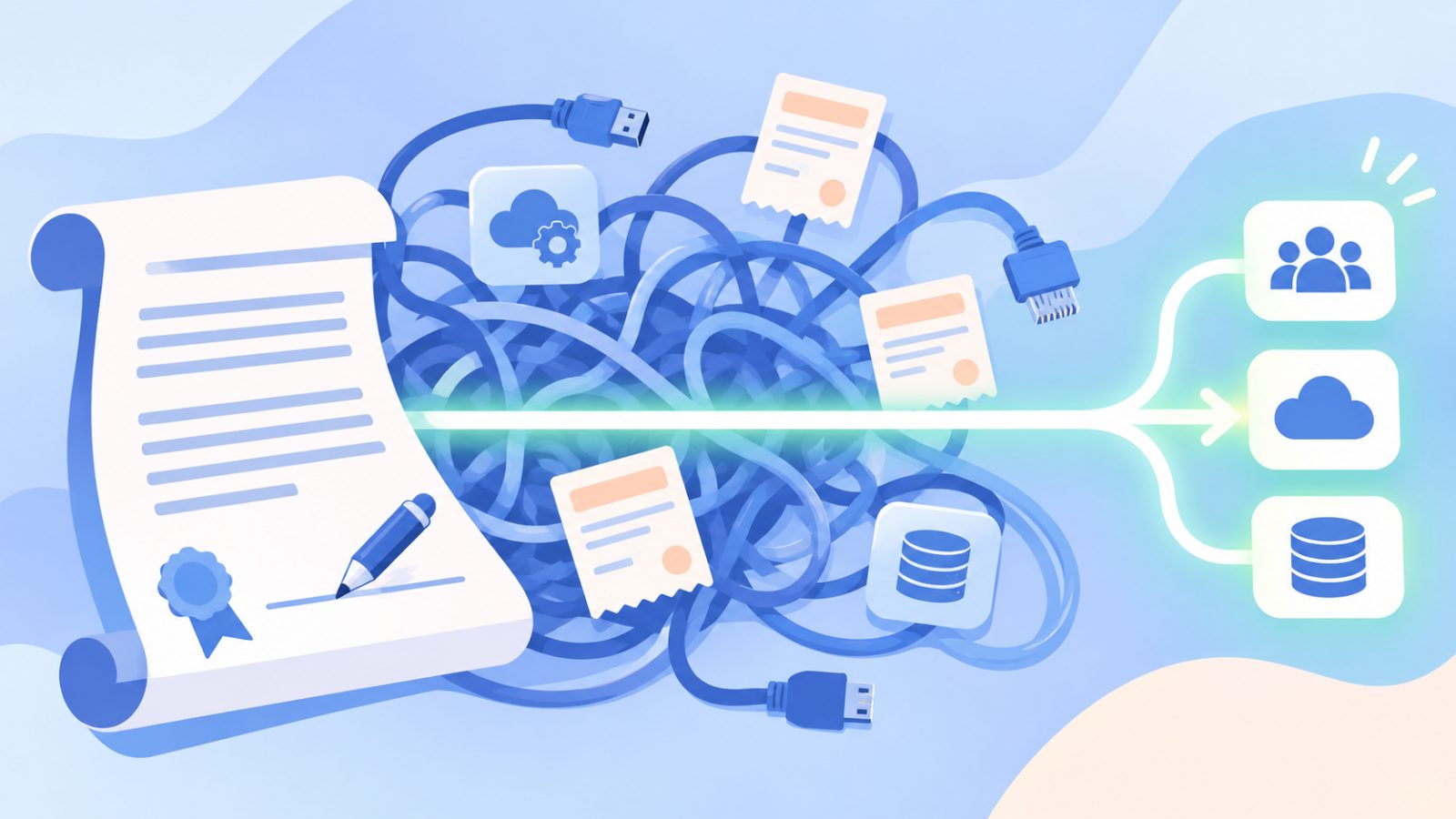
The best SailPoint alternative is the one that fixes the reason you're unhappy, and for most teams that reason isn't a missing feature. It's the cost of making the features work: consultants for setup, paid hours for configuration questions, slow HR syncs and connectors that take months. Before you renew, work out which of those you're actually paying for, then compare alternatives on that, not on a feature grid. If you're choosing between a one-year extension and a three-year term, the one-year buys you the time to run that comparison properly.
Why is this SailPoint renewal season different?
Because the product you'd be renewing into is changing fast.
At Navigate 2026 in October, SailPoint announced Autonomous Agents, a set of AI agents meant to govern other agents, along with A-ISPM, conditional just-in-time provisioning for people, service accounts and AI agents, and IdentityIQ 9.0 for on-premises and hybrid customers. Earlier in the year it bought Entro Security for non-human identity discovery, and Entro's products are offered to SailPoint customers as standalone offerings for now.
That's a big roadmap. Analysts at Futurum called it a well-positioned bet, with open questions about runtime authorization and which agents' identities it can actually reach.
A three-year renewal is a bet that this roadmap shows up in your tenant, under your contract, before the term ends. That's worth a direct conversation before you sign.
What are SailPoint customers actually frustrated by?
This month, several of the security and IAM teams we spoke with were evaluating because a SailPoint renewal is coming up. Different companies, different sizes, and almost the same list:
- Setup that depends on consultants. Getting started took a services engagement, and so does each hard connector after that.
- Configuration questions that turn into paid hours. SailPoint sells Expert Services as pre-paid hours for targeted help. Teams told us routine "how do I configure this" questions end up there too.
- Slow HR aggregation. A full sync from the HR system takes long enough that the team works around it, and write-back breaks after connector updates.
- Scripts doing the platform's job. Scheduled scripts fill gaps the product can't handle natively.
- Identity counts nobody trusts. Duplicates from acquisitions and multiple sources inflate the number you're licensed on.
- Non-human identities as a separate purchase. Service accounts, API keys and agents get bought, deployed and reviewed on their own track.
None of these is a missing feature. They're the gap between what the platform can do and what it does in your environment without help. That gap is where buyer's remorse in IAM usually comes from.
What should you ask before you sign another three years?
Take these into the renewal conversation, and into any evaluation you run alongside it.
- How many identities are we paying for, and how many are real? Deduplicate before you agree to a count. If an acquisition or a messy source inflated last year's number, fix it now, not at the next renewal.
- What did we spend beyond the subscription? Add up services hours, partner statements of work and the internal time spent maintaining scripts. That's the real cost of the platform, and it's the number to compare.
- Which of the new agent features are in our contract? Ask in writing whether Autonomous Agents, A-ISPM and the Entro capabilities are included or separate line items, and when each is available in your tenant.
- How long does a joiner, mover or leaver take end to end? Measure from the HR change to the last app updated. Slow aggregation shows up here as access that lingers after someone leaves.
- Which apps are still outside governance? Count the apps with no connector, and the ones governed only through the IdP. IdPs only govern the apps they touch, and SCIM is often not an option.
- Who owns our non-human identities? If the answer is "the security team, eventually", that's a gap no renewal closes. We wrote about who owns an NHI and what happens when they leave.
- What does a one-year term cost compared with three? Multiyear discounts trade flexibility for price. Know the difference in dollars before you decide it's worth it.
If you need help making the budget case either way, here's how to talk to your CFO about identity and access.
What are the best SailPoint alternatives?
There are three honest options, and staying is one of them.
- Stay and renegotiate. If the answers above come back fine, renew. Use them to fix the identity count, get the agent features in writing, and push on the term.
- Governance from your IdP. Microsoft Entra ID Governance and Okta Identity Governance make sense when nearly every app already sits behind that IdP. They're weaker for the apps that don't.
- A governance platform built on effective access. Newer platforms, YeshID among them, start from what every identity can actually reach in each app, not just what the IdP or the role model says it should reach.
Whichever you test, run the proof of concept on your own environment, not a sandbox. Bring your HR source, your worst app (the one with no SCIM and a custom admin console), a real leaver, a non-human identity and an access review your auditor would accept. The vendors that can't handle those in a pilot won't handle them in production.
Where does YeshID fit?
YeshID is identity management and governance in one platform, for every identity: human, machine or agent. Our view is that effective access is the new system of record, because your apps know more about access than your IdP does.
- Understand access: see what every person, service account, OAuth grant and AI agent can actually reach, across every app.
- Govern access: HRIS-driven lifecycle, access requests in Slack or Teams, and just-in-time access.
- Control access: revoke and deprovision across every app, OAuth grant and AI agent, including apps with no SCIM, with every change verified.
- Prove access: access reviews on live data, with evidence from the system that made the changes.
FAQ
Should we sign a one-year or a three-year SailPoint renewal?
If you're unsure about the platform, take the one-year term even if it costs more per year. It gives you room to run a real evaluation without a contract deadline forcing the decision. If you've already decided to stay, a multiyear term with the agent features in writing is reasonable.
How early should we start evaluating alternatives before a renewal?
Earlier than feels necessary. A useful proof of concept runs on your own HR data and real apps, and that takes planning on both sides. Starting a few months before the renewal date means the evaluation informs the negotiation instead of racing it.
Can we replace SailPoint gradually instead of all at once?
Yes, and it's usually safer. Teams often move one function at a time, such as lifecycle for a set of apps or access reviews for one audit, and run both systems in parallel until the new one has proven itself. Just be clear about which system is the source of truth for each decision during the overlap.
Does SailPoint govern AI agents now?
SailPoint announced agent governance features at Navigate 2026 and acquired Entro for non-human identity discovery. What matters for your renewal is which of those are generally available, which are included in your contract, and whether they cover the agents your teams actually run.
Renewal coming up? Bring your HR feed and your ugliest app, and we'll show you what effective access looks like on your own data. 👉 Get a demo