
Why SCIM Is So Hard to Set Up
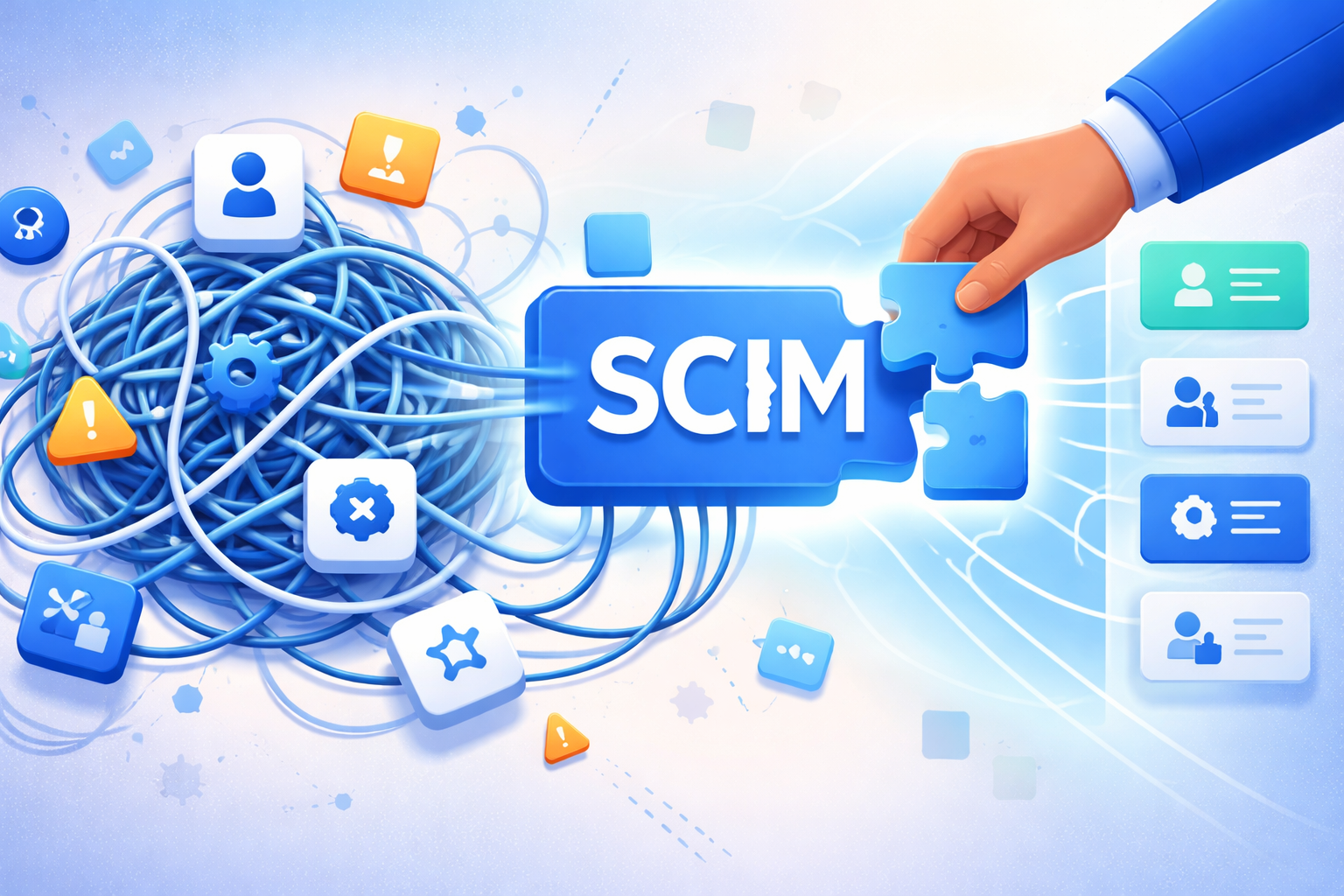
SCIM was supposed to make provisioning simple. A standard API that allows identity systems to automatically create, update, and remove users across applications. Instead of building custom integrations for every SaaS tool, vendors could implement SCIM once and everything would just work.
In practice, anyone who has actually implemented SCIM knows the reality is very different.
Provisioning through SCIM often becomes one of the most frustrating parts of an identity deployment. What looks like a standard quickly turns into weeks of attribute mapping, debugging payloads, and trying to understand why one application behaves completely differently than another.
Teams building identity platforms often see this firsthand when integrating dozens or hundreds of SaaS applications. Two vendors may both claim SCIM support, yet their implementations behave completely differently once provisioning actually begins.
The problem is not the concept of SCIM. The problem is how it shows up in real environments.
Every SCIM Implementation Is Different
SCIM defines a protocol and a schema, but the specification leaves enough room for interpretation that every vendor implements it slightly differently.
One application might require a username attribute while another requires email. Some platforms expect external IDs. Others rely on internal IDs that only exist after the user is created. Group handling also varies widely. Some applications treat groups as roles. Others ignore them entirely.
The result is that SCIM becomes something closer to “SCIM-ish.” Identity teams spend time translating between what the identity provider sends and what the application expects.
Attribute Mapping Becomes a Puzzle
Even when two systems technically support SCIM, their identity models rarely align.
Applications often require attributes that do not match the standard schema. Fields may be named differently, structured differently, or stored in completely different places. What one system calls a department might appear as an organizational unit in another. Email may double as username in one application and be treated as a separate attribute in another.
Each integration requires careful mapping, testing, and adjustments. Multiply that across dozens or hundreds of applications and provisioning quickly becomes a maintenance exercise.
Groups Rarely Mean the Same Thing
Groups are supposed to simplify provisioning. In most identity providers, groups are the mechanism used to assign users to applications and control access.
Inside applications, however, the concept of a group often does not exist in the same way.
Some applications use roles. Others use licenses, workspaces, projects, or permissions. A group assignment from the identity provider has to be translated into whichever model the application uses internally.
That translation layer becomes fragile. Identity teams end up creating multiple groups that map to slightly different combinations of roles or entitlements inside the application.
Debugging SCIM Is Painful
When something breaks in a SCIM integration, troubleshooting is rarely straightforward.
Error messages are often vague. A provisioning attempt might simply return an invalid request or attribute missing error. From there, administrators have to inspect logs, examine payloads, and compare them with vendor documentation to determine what actually failed.
In many cases the only way to diagnose the issue is to manually replay API calls and experiment until the request succeeds.
Provisioning Order Matters More Than the Protocol Assumes
SCIM typically sends simple operations such as creating a user or adding a user to a group. Many applications require more complex sequences.
A user may need to exist before a license can be assigned. A license may need to exist before a role can be applied. A workspace may need to exist before the user can be added to it.
If the order of these operations is wrong, the request fails even though the SCIM payload itself is valid.
The protocol does not account for these dependencies, so identity teams have to manage them externally.
Many Applications Only Partially Support SCIM
Another complication is that SCIM support often exists in name only.
Some applications allow user creation but not updates. Others allow provisioning but not deprovisioning. Group synchronization may be missing entirely. In many cases the implementation only covers a small subset of the full lifecycle.
When that happens, organizations end up combining SCIM with custom APIs, scripts, or manual processes to fill the gaps.
SCIM Often Depends on SAML
Another complication is that many SaaS vendors require SAML SSO to be configured before SCIM provisioning can be enabled. This is not a requirement of the SCIM protocol itself, but a design choice vendors make to establish a trusted identity source.
In practice it means provisioning cannot be treated as a simple API integration. The authentication layer and the provisioning layer often have to be configured together.
From the outside it looks like provisioning should be a simple API connection. In reality, even enabling SCIM can require coordinating authentication, identity attributes, and lifecycle assumptions across two different systems.
SCIM Solves Transport, Not Identity Logic
The deeper issue is that SCIM only handles one part of the identity lifecycle.
It moves identity changes from one system to another. It does not define how those changes should be decided, approved, or orchestrated.
Modern identity environments involve onboarding flows, access requests, entitlement assignments, temporary overrides, policy enforcement, and lifecycle automation across many systems. SCIM simply delivers the final change.
In other words, SCIM is the plumbing.
The real complexity lives above it.
The Reality of Modern Identity Environments
The SCIM model assumes a relatively simple structure: a user is created, assigned to groups, and granted access to applications.
Modern environments are far more complex. Organizations manage employees, contractors, service accounts, API tokens, and increasingly AI agents. Access is controlled through roles, licenses, permissions, workspaces, and project memberships that vary from application to application.
Every system models identity differently. SCIM does not normalize those differences.
That is why provisioning remains difficult even when the protocol itself is standardized.
Why AI and Documentation Do Not Make SCIM Integrations Simple
AI coding tools have made it dramatically easier to generate API calls and integration scaffolding, which leads many people to assume that SCIM integrations should now be trivial. The protocol itself is straightforward, and AI can easily generate the requests required to create or update users.
The difficulty appears when those requests have to interact with a real SaaS application. Every product models identity differently. Some rely on roles, others on licenses, workspaces, or permissions. Required attributes vary, group behavior varies, and lifecycle support is inconsistent. AI can generate the plumbing, but it cannot infer how each application expects identity to behave internally.
Documentation helps, but it rarely captures the full behavior of a system. Engineers usually begin a SCIM integration by reading the vendor’s documentation, mapping attributes, and implementing the basic provisioning flow. In practice, the real work begins once the integration is tested against the live system. Attributes that appear optional may be required, operations may depend on sequencing, and identity fields often need to align with authentication systems.
Successful integrations are usually built through testing, observing failures, and adjusting the mapping between systems. The code can be generated quickly. Understanding how two identity models actually interact still requires engineering work.
The Takeaway
SCIM is still valuable. It provides a common transport mechanism that allows identity systems and applications to communicate.
But it does not eliminate the complexity of identity management. It simply exposes it.
Organizations still need systems that understand lifecycle events, translate identity models between applications, and orchestrate changes across the environment.
SCIM moves identity data between systems. The real challenge is translating identity models and ensuring lifecycle changes happen consistently across every application.