

Identity governance (IGA)
Decide who should have access. Then keep it that way.
Requests, approvals, lifecycle, roles and exceptions, built on the access that actually exists.
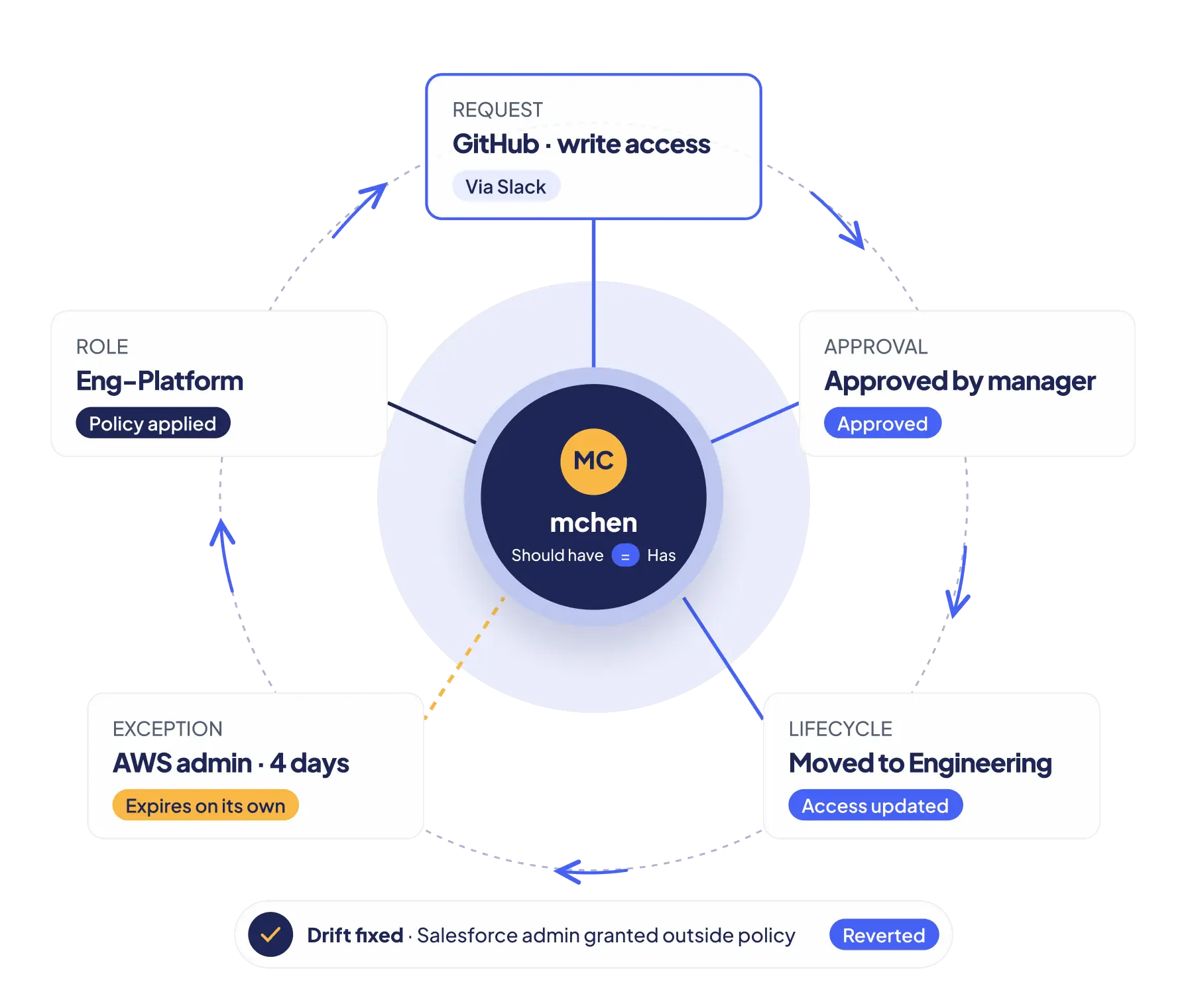
Identity governance (IGA)
Requests, approvals, lifecycle, roles and exceptions, built on the access that actually exists.
The problem


Govern Access Capabilities
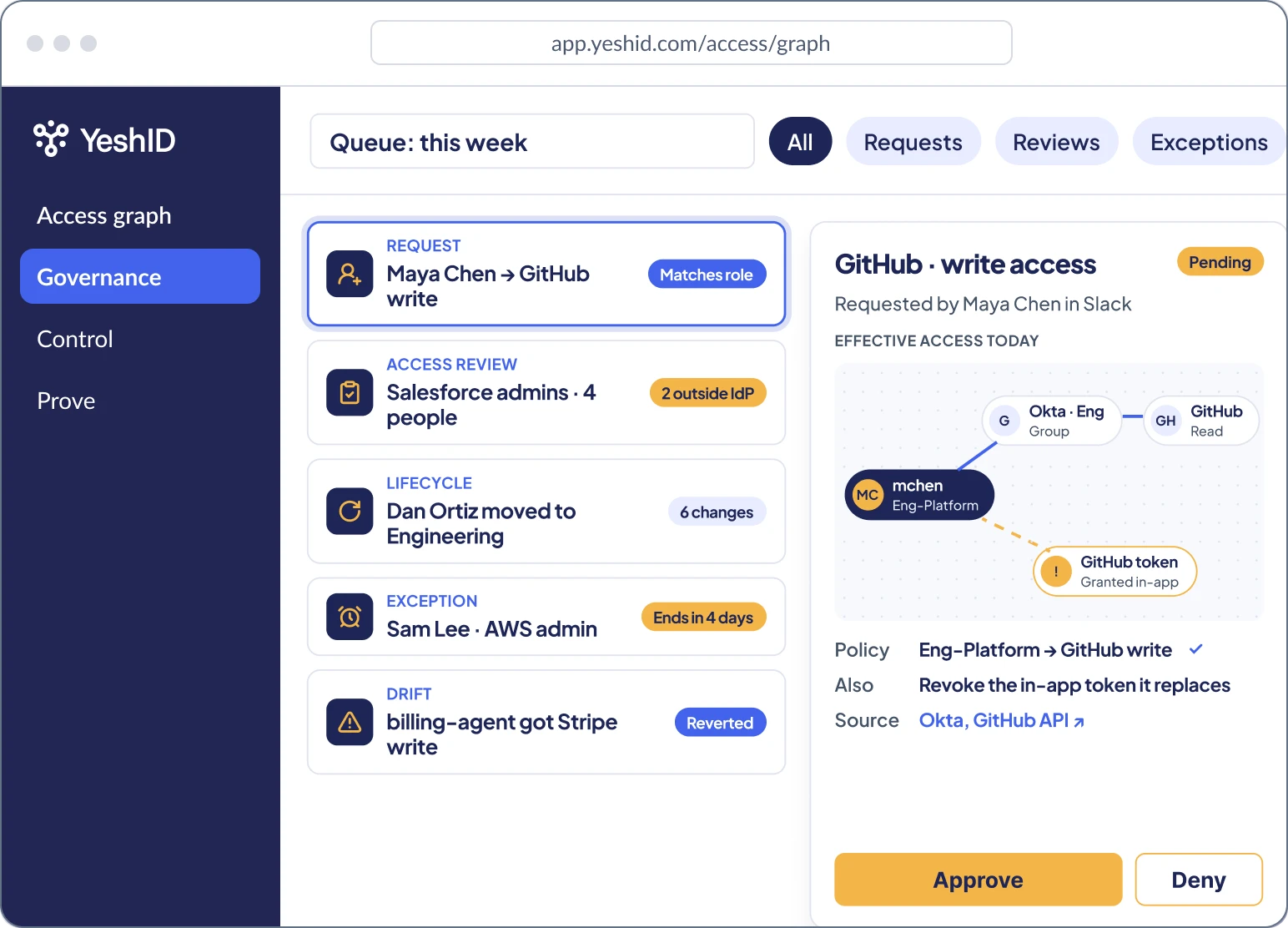

People get the apps they need in Slack or Teams. No portal to learn.

Route by app owner, manager or sensitivity. Simple requests move fast. Sensitive ones get a second look.

Access for an hour, a day or a project. It ends on time.

Joiners, movers and leavers triggered by your HRIS, across every app, not just the SCIM-connected ones.

Roles built from what people in a job actually use.

Write the rules once: who gets what, when, approved by whom.

New access in, old access out. Both halves.

Every exception has an owner, a reason and an end date.
How it works
HRIS, IdP and every app YeshID can see.
Rae suggests roles from the access people actually have and use. You decide what becomes policy.
Slack or Teams, routed to the right approver.
Approvers see what the access grants, who else has it and whether it fits policy.
Who asked, who approved, why and when it expires.
Use cases


A new engineer starts with the right access, without IT building it by hand.
Someone moves from Sales to Customer Success. The CRM admin role goes when the new access arrives.
Access starts with the contract and expires with it.
Two hours of elevated access, approved in Slack, gone when the window closes.
Agents go through the same request path as people, with a named owner.
Real access is messy, so exceptions expire on their own. YeshID keeps policy separate from what's live, so a reorg can sit in a two-week transition and a temporary exception ends on schedule, without corrupting your role model.
Approvals and roles are only as good as the data under them. YeshID governs against what's real, across every app.
Automation tools move tickets. They don't know what access exists or whether it matches policy. YeshID does.
Something else on your mind? Talk to our team.
Govern Access is YeshID's policy layer: it defines who should have access, who approves it and when it ends, grounded in effective access.
For many teams, yes. YeshID covers requests, approvals, JIT, lifecycle, RBAC and reviews. If SailPoint or Saviynt has become brittle, YeshID replaces it.
Yes. Joiners, movers and leavers start in your HRIS, and YeshID carries the change into every app.
In Slack or Microsoft Teams.
Access is granted for a set window and removed when the window closes. Removal is verified at the source.
Yes. Service accounts, OAuth apps and AI agents go through the same request, approval and ownership model as people.
Clear policy, real exceptions and a record of every decision.