
Why Offboarding AI Agents Is Harder Than Offboarding Employees
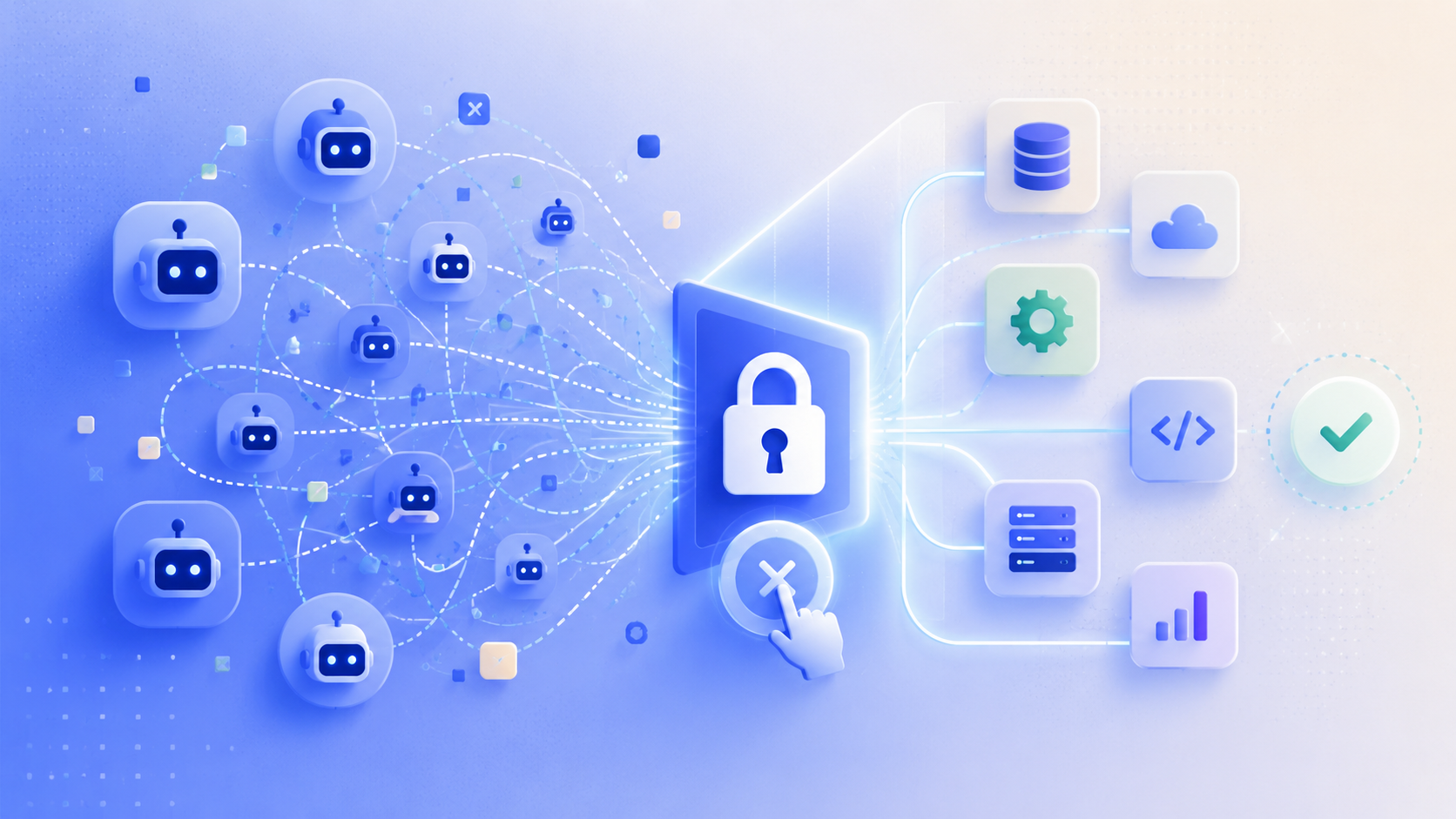
Offboarding an employee is usually straightforward.
There is an HR event, a manager, an end date, and a user account to disable. The process may not be perfect, but at least the object is clear: this person is leaving, so their access needs to be removed.
AI agents do not work that way.
They do not resign. They do not exist in HR systems. They are often created quickly to support a workflow, integration, automation, internal assistant, reporting task, or AI-enabled process. Then they continue operating quietly in the background long after the original project, owner, or purpose has faded from memory.
And unlike employees, AI agents rarely have a single identity boundary.
An employee typically authenticates through an IdP and receives access tied to a role. AI agents often operate through a mix of OAuth grants, API keys, delegated permissions, service accounts, SaaS integrations, cloud roles, and application-local access models. Their effective access is usually spread across multiple systems simultaneously.
That is what makes offboarding them hard.
The challenge is not just disabling an account. The challenge is understanding the full access path the agent accumulated over time.
Employees leave. AI agents linger.
Most organizations already have reasonably mature employee offboarding workflows.
Someone leaves the company. HR triggers a workflow. The IdP disables the account. Access is revoked. Devices are collected. The process is imperfect, but at least the lifecycle is understood.
AI agents and service accounts are different because they rarely have a clean lifecycle event attached to them.
They are created ad hoc:
- During a migration
- To automate a report
- To sync customer data
- To power an integration
- To test an AI workflow
- To connect a SaaS platform
- To support an internal tool
Then they quietly become part of the infrastructure.
Months later, nobody remembers:
- Why they were created
- What systems they touch
- What permissions they still hold
- Whether they are still actively used
- Who actually owns them
That is why offboarding an AI agent feels less like terminating a user and more like decommissioning infrastructure.
You are not just asking:
“Can we delete this?”
You are asking:
- What depends on this?
- What breaks if it disappears?
- What delegated access does it still have?
- Is it acting on behalf of users?
- Does anyone still understand how it works?
The safest teams do not start by deleting the agent. They start by understanding it.
The real problem is distributed access
The hardest part of offboarding AI agents is that their access is rarely centralized.
A traditional employee may authenticate through Okta or Entra and receive relatively visible access assignments. AI agents frequently accumulate permissions across systems through indirect or delegated mechanisms.
That can include:
- OAuth grants
- API keys
- Service accounts
- Cloud IAM roles
- SaaS application permissions
- Secrets managers
- CI/CD pipelines
- Webhook credentials
- Tool-calling frameworks
- User-delegated access
This creates a major operational problem: no single system fully understands the agent’s effective access.
An AI agent may appear harmless in one environment while still maintaining privileged access somewhere else through a forgotten token, delegated OAuth grant, or app-local role.
This is where many teams realize they are not offboarding one identity.
They are untangling an access graph.
Before removing access, figure out what the agent actually does
The first step is not deletion.
The first step is discovery.
Before removing anything, teams should look for evidence of use across:
- API activity
- SaaS audit logs
- Cloud logs
- Workflow engines
- Job schedulers
- Integration settings
- Webhook configurations
- Runtime environments
- CI/CD systems
- Secrets stores
The goal is not to achieve perfect visibility immediately. The goal is to determine whether the agent is:
- Actively used
- Dormant
- Unknown
Unknown is the dangerous category.
An AI agent with no clear owner may still be:
- Syncing data
- Updating records
- Triggering workflows
- Pulling sensitive information
- Operating customer-facing automation
- Running background tasks
- Acting on behalf of employees
And because many AI agents perform background work, failures are not always immediately obvious.
A disabled employee account creates noise quickly. A broken AI workflow may stay invisible for days.
Assign ownership before making changes
One of the biggest operational problems with AI agents is unclear ownership.
Someone created the workflow. Someone connected the OAuth grant. Someone configured the integration. That person may have changed teams, left the company, or forgotten the implementation details entirely.
Before offboarding an AI agent, assign a current owner.
That owner does not need to be the original creator. But someone must be accountable for:
- Understanding the business impact
- Confirming whether the agent is still needed
- Approving the removal plan
- Monitoring post-disablement fallout
Without ownership, organizations usually fall into one of two bad patterns:
- They avoid touching the agent forever because nobody understands it.
- They remove it aggressively and accidentally break production systems.
Neither outcome is good operational hygiene.
Disable before you delete
The safest approach is staged decommissioning.
Do not delete first.
Disable first.
That might mean:
- Revoking OAuth tokens
- Disabling API keys
- Removing delegated permissions
- Pausing workflows
- Disabling service accounts
- Stopping agent runtimes
- Rotating credentials
- Blocking execution paths
The point is to create a reversible step.
If something breaks, you need a recovery path. Immediate deletion feels clean, but it removes your ability to restore service quickly if the organization discovers an unknown dependency.
Infrastructure teams have understood this principle for years. AI agents should be treated the same way.
Watch what breaks after disablement
Once the agent is disabled, observation becomes critical.
Teams should monitor for:
- Failed jobs
- Sync failures
- Broken integrations
- Stale reports
- Webhook failures
- Alerting anomalies
- Support tickets
- Authentication failures
- Workflow interruptions
Some failures appear immediately.
Others only surface:
- Overnight
- During month-end processing
- During customer syncs
- When scheduled automations run
- When downstream systems expect updates
This waiting period matters because AI agents often operate silently in the background.
Offboarding is not just the act of turning something off. It is proving that disabling it did not create unacceptable operational impact.
Clean up every access path
One of the most common mistakes organizations make is removing the visible identity while leaving the actual access behind.
AI agents frequently maintain multiple independent access paths simultaneously.
That can include:
- OAuth grants
- Long-lived API tokens
- SaaS application roles
- Secrets in CI/CD systems
- Cloud IAM permissions
- Webhook credentials
- Shared service accounts
- Embedded credentials inside scripts
- Group memberships
- Tool integrations
True offboarding means cleaning up the entire access footprint.
That includes:
- Revoking OAuth grants in Google or Microsoft
- Rotating or deleting API keys
- Removing SaaS permissions
- Cleaning up secrets
- Removing group memberships
- Deleting workflow references
- Archiving agent configurations
- Removing runtime access
The goal is not simply to stop the agent today.
The goal is to ensure it cannot quietly come back tomorrow through a forgotten credential or delegated permission.
AI agents create a new kind of identity problem
Most identity systems were designed around employees joining and leaving companies.
AI agents do not follow those patterns.
They are created quickly, granted broad delegated access, connected across SaaS systems, and rarely tracked with the same operational rigor as human identities.
And unlike employees, they often operate through distributed access models that no single team fully understands.
That is why offboarding AI agents is harder than offboarding employees.
The problem is not that AI agents exist. Modern organizations increasingly depend on them. The problem is that most companies still manage them using identity and lifecycle models originally designed for humans.
That gap is becoming one of the biggest operational security challenges in modern identity.