
IAM or SaaS Management First
How Heads of Technology Should Think About Control, Cost, and Action? As organizations grow past a certain point, technology leaders start seeing the same pattern repeat.
Access decisions are made quickly. Tooling spreads organically. People move roles faster than systems are updated. Nothing is obviously broken, but control feels increasingly indirect.
That’s usually when teams start asking where to invest first: in SaaS management to get organized, or in Identity & Access Management to get control.
They’re often discussed together. They shouldn’t be.
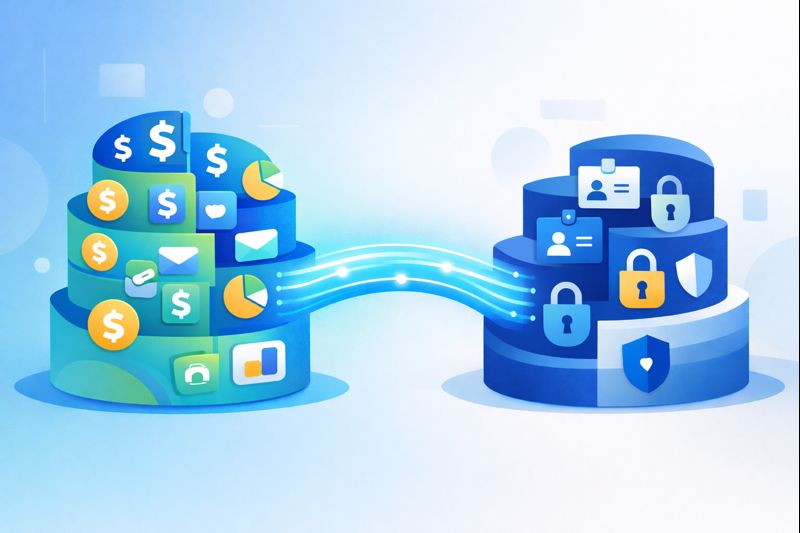
SaaS Management Reports on the Environment
SaaS management platforms, like Torii or Corma, are designed to answer finance-oriented questions.
They surface which applications exist, how many licenses are assigned, who owns each vendor, and where there may be opportunities to reduce spend. For Finance teams, this reporting layer is critical. It creates visibility and predictability around an otherwise fast-moving SaaS footprint.
But by design, SaaS management is largely descriptive.
It shows what exists. It suggests where action might be taken. It does not typically enforce access.
IAM Models Reality and Can Act on It
Identity & Access Management starts from a different premise.
It assumes that understanding the environment isn’t enough. At some point, systems need to act.
IAM systems model who can log in, what permissions they hold, how that access was granted, and how it evolves over time. More importantly, they sit in the path of enforcement.
Modern IAM platforms don’t just tell you that access exists. They allow you to remove it.
That includes:
- Deprovisioning users when they leave or change roles
- Revoking access inside applications
- Removing licenses safely
- Cutting off OAuth tokens, service accounts, and automations
- Enforcing time-bound or policy-driven access
This action is taken from a security and IT perspective, not a financial one. The goal isn’t to save money directly. It’s to ensure that access matches intent and that changes actually take effect.
Platforms like YeshID are built to both understand and act on access, so that lifecycle decisions aren’t just documented, they’re enforced.
Why Acting on Lifecycle Reduces Cost Anyway
One of the quiet benefits of having an IAM layer that can act is that cost reduction stops being a separate initiative.
When access can be safely removed:
- Licenses don’t linger “just in case”
- Over-provisioning becomes unnecessary
- Cleanup doesn’t get deferred
- Teams don’t hold onto tools defensively
Costs go down because uncertainty goes down. This isn’t optimization driven by spreadsheets. It's a reduction driven by confidence. Finance may track the savings. IT makes them possible.
The Difference in Starting Points
If you start with SaaS management, you get better at identifying opportunities. But acting on those opportunities often requires a separate conversation with IT, additional tooling, or manual work.
If you start with IAM, you create the ability to act immediately. Understanding improves over time, but enforcement is available from day one.
That difference compounds.
Over time, organizations that lead with identity find that:
- Offboarding actually removes access
- License cleanup doesn’t break production
- App rationalization sticks
- Security posture improves without slowing teams down
Where This Leaves Heads of Technology
For Heads of Technology and IT, the decision isn’t about choosing between organization and control.
It’s about deciding whether your first system should describe the environment or shape it.
SaaS management helps you understand vendors and spend. IAM helps you understand and enforce how your company actually operates.
Both are necessary. But they solve different problems, and they deliver leverage at different moments.
Starting with IAM gives you the ability to act. Everything else becomes easier after that - including the ability to properly manage spend.