
NHI / Agent Inventory Is Not Agent Governance
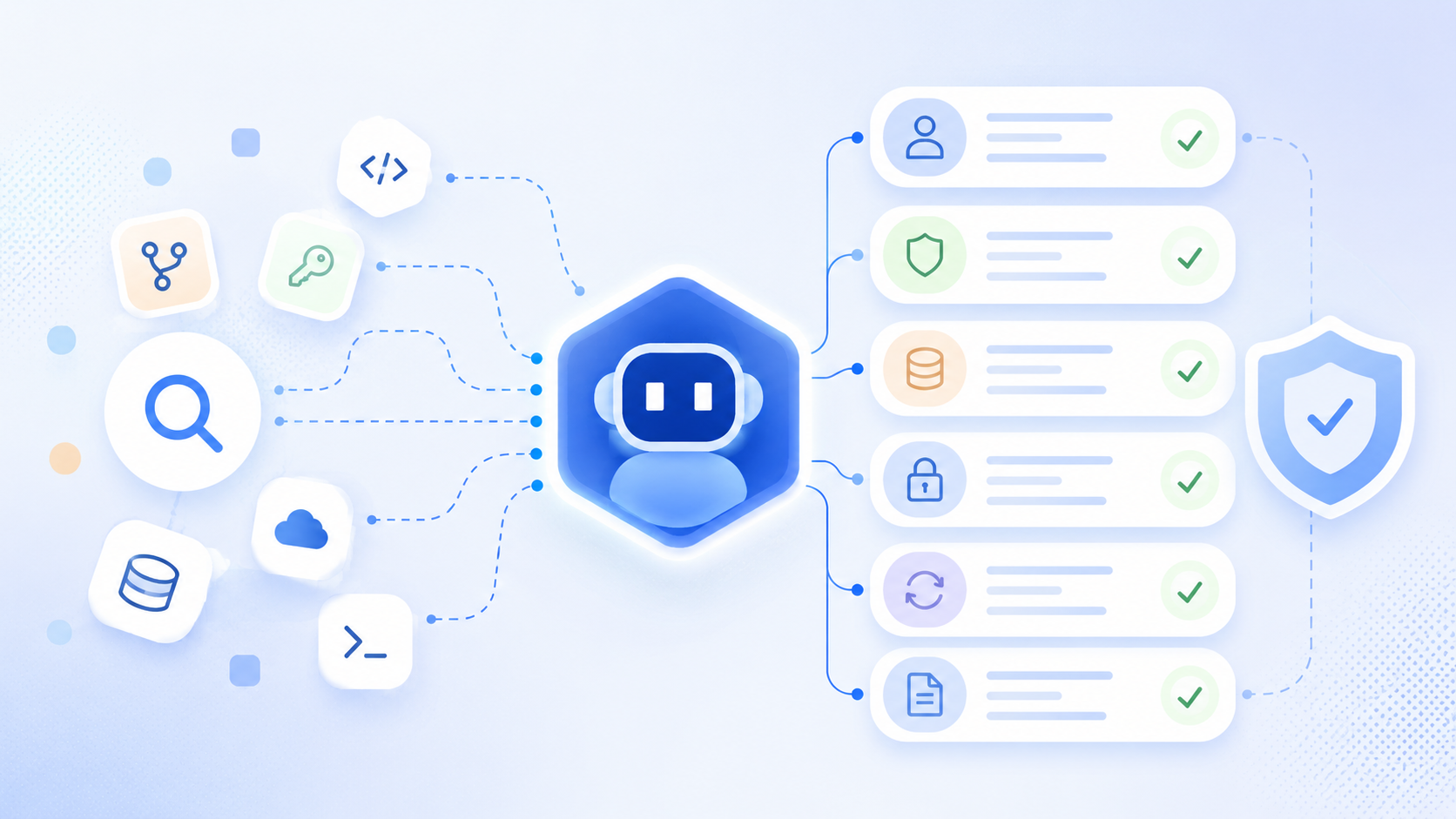
Agent inventory is necessary. It is not enough.
The first wave of NHI tooling is helping companies answer an important question: what non-human actors exist?
That matters. But the harder question is what comes next: should they still have this access, who owns it, and what do we do about it?
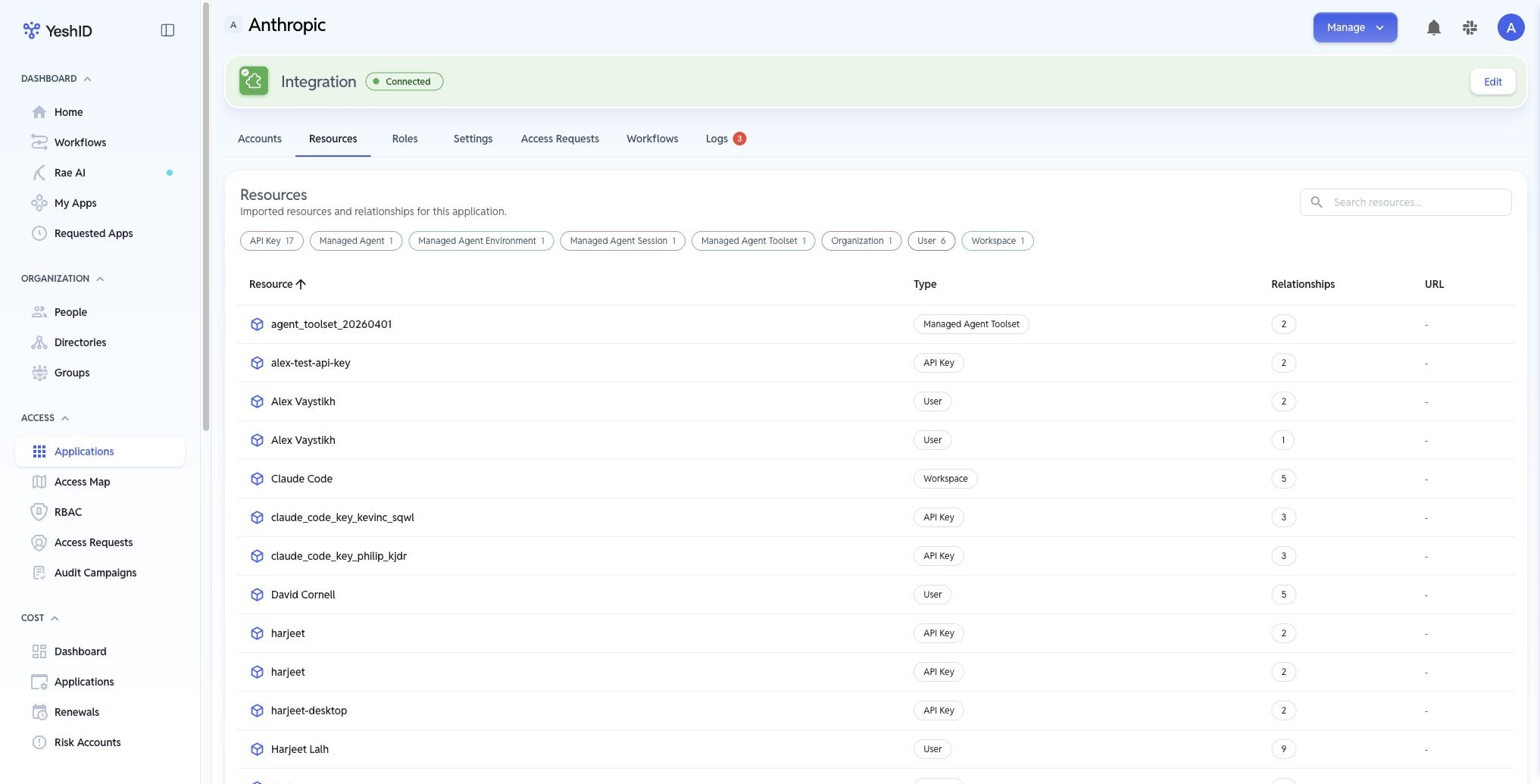
Take Anthropic as an example.
Knowing that an Anthropic agent exists, where it runs, and which tools it can reach is a useful first step. But it does not answer the questions security and IT teams eventually have to defend:
Who owns this agent?
Who approved it?
What business process does it support?
What data can it reach?
What credential does it rely on?
What happens when the owner changes roles or leaves?
How do we prove that later?
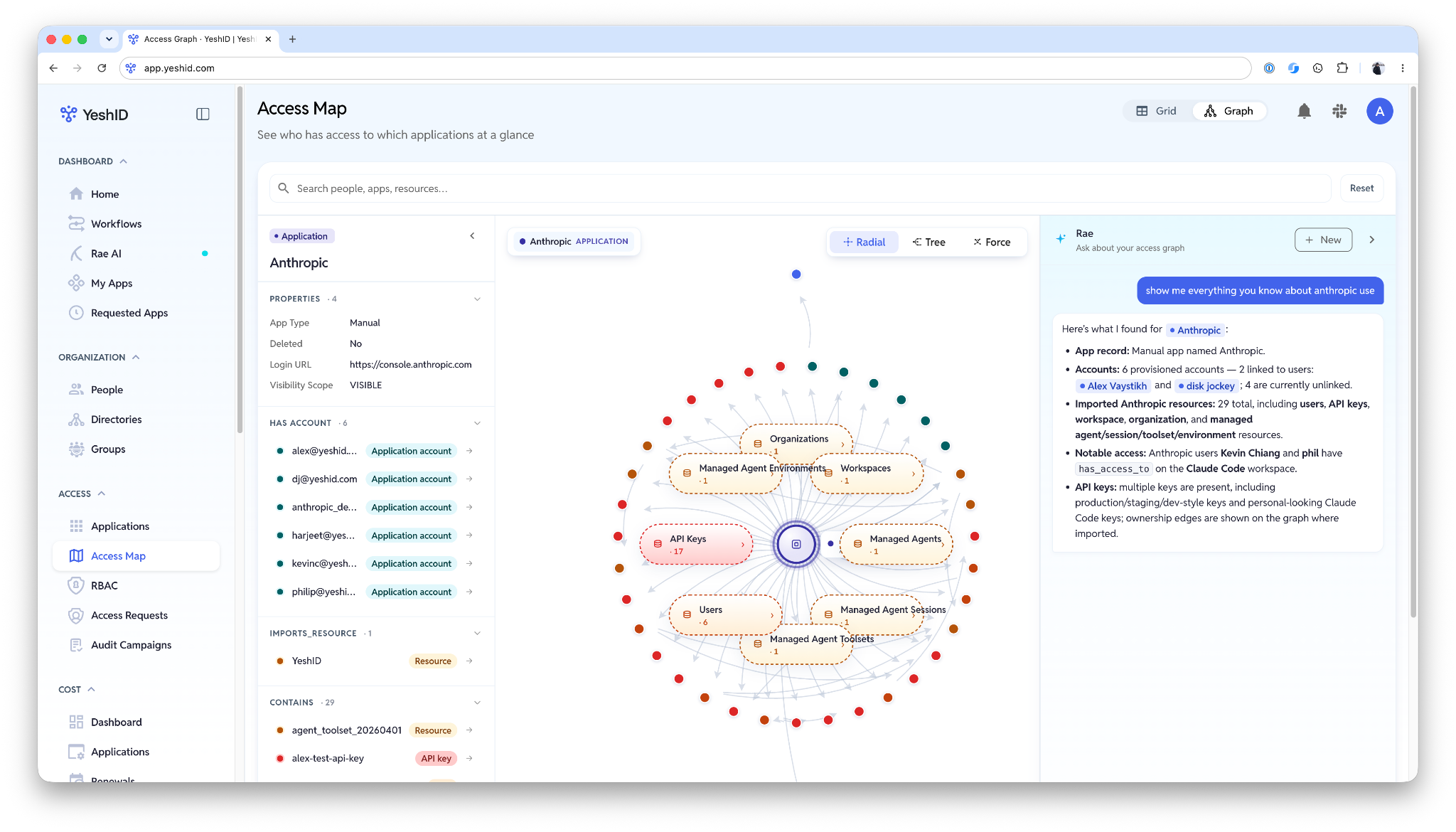
That gap matters because agents do not live neatly inside one console.
A support agent may be created in Anthropic, connected to internal tools, granted access through an API key, and owned by a person whose job status is tracked somewhere else. Anthropic may know the agent. The IdP knows the user. The vault knows the credential. The SaaS app knows the permission. None of those systems alone can tell you whether the access still makes sense.
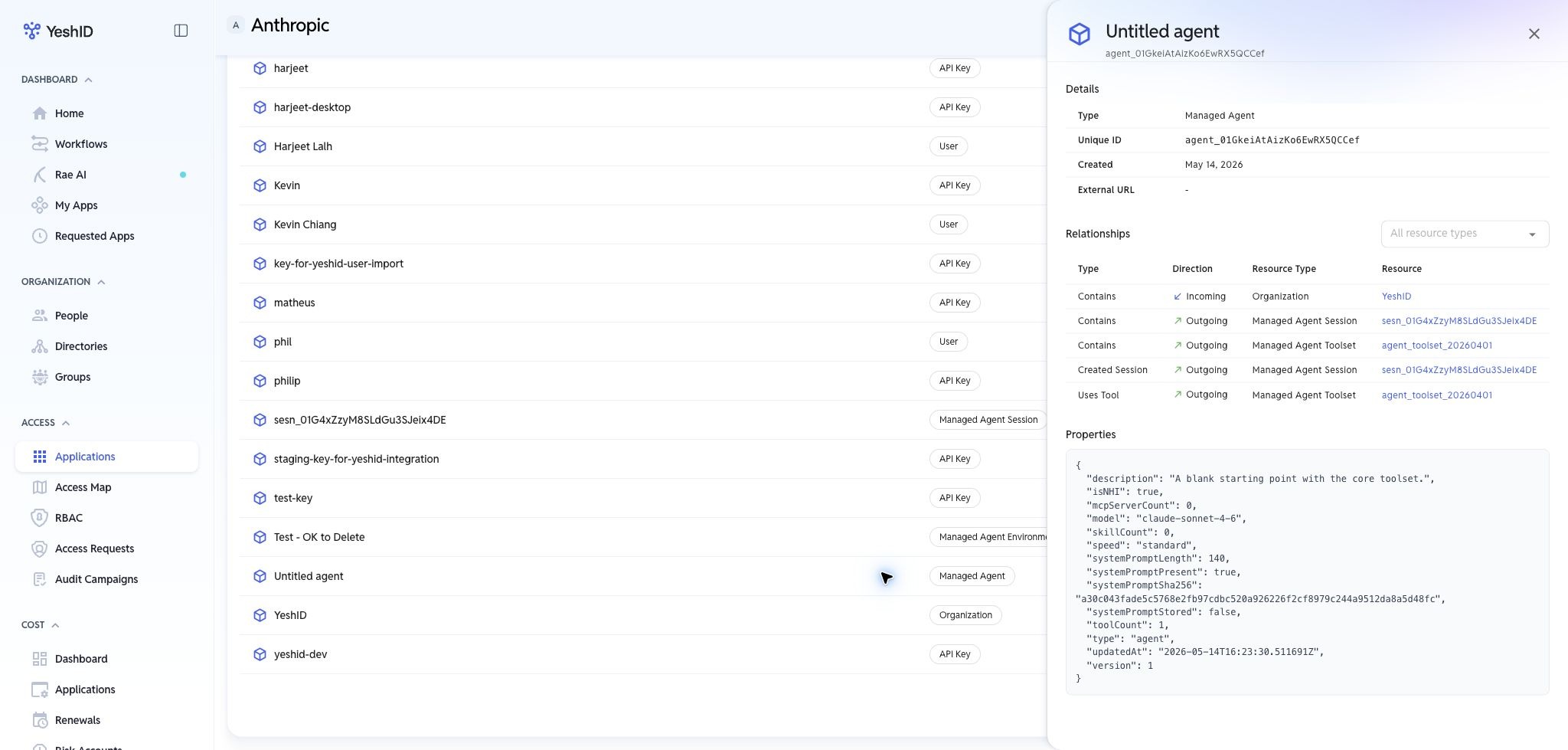
That is why YeshID connects Anthropic into the broader identity and access model.
The goal is not another list of agents. The goal is to connect agents, users, workspaces, API keys, tool access, credentials, owners, roles, approvals, and lifecycle events so teams can decide whether access is appropriate.
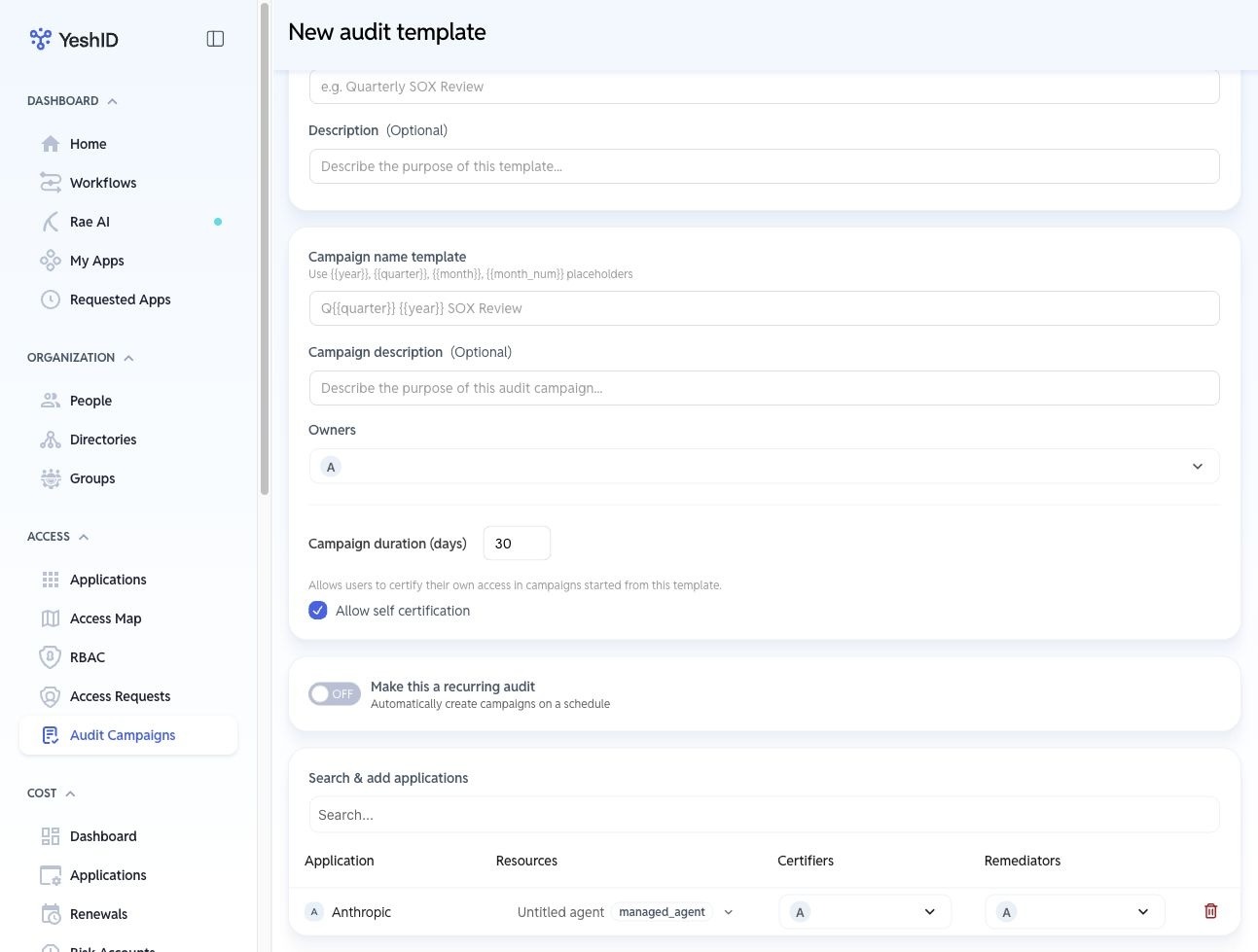
Inventory says: this agent exists.
Governance says: this agent is owned by Support Ops, approved for ticket triage, allowed to reach these systems, blocked from customer exports, reviewed every quarter, disabled when the owner leaves, and included in audit evidence.
That difference matters.
Agent and NHI inventory is becoming table stakes. The real work is connecting those non-human actors to the users, keys, apps, approvals, policies, and lifecycle events that determine whether their access is appropriate.
Platform-native inventory will keep improving, and that is a good thing. Anthropic can expose important facts about agents, workspaces, keys, tools, environments, deployments, and activity. That data is valuable. But the risk is not only inside Anthropic. It is in the relationship between the agent and the rest of the company’s access model.
This pattern is familiar. SaaS sprawl created dozens of app consoles with partial answers about users and permissions. Agent sprawl can do the same, except the actors are software systems that can chain tools, reuse credentials, and keep running after the original business context has changed.
That is where drift appears.
The directory says a user is gone, but an agent’s key remains active.
A vendor is no longer approved, but its connector still has access.
A data policy changes, but an old deployment keeps using the previous credential.
A team reorganizes, but the owner, approver, and review path never get updated.
Agent governance has to close those gaps.
That means inventory, ownership, access scope, lifecycle, policy, remediation, and evidence have to work together. YeshID’s Anthropic integration brings agent objects into that model, so they can be reviewed and managed alongside the identity facts that decide whether access is still appropriate.
Agent inventory tells you what is there.
Agent governance tells you whether it should be there, what it may do, who is accountable, when it should change, and how you prove it.